

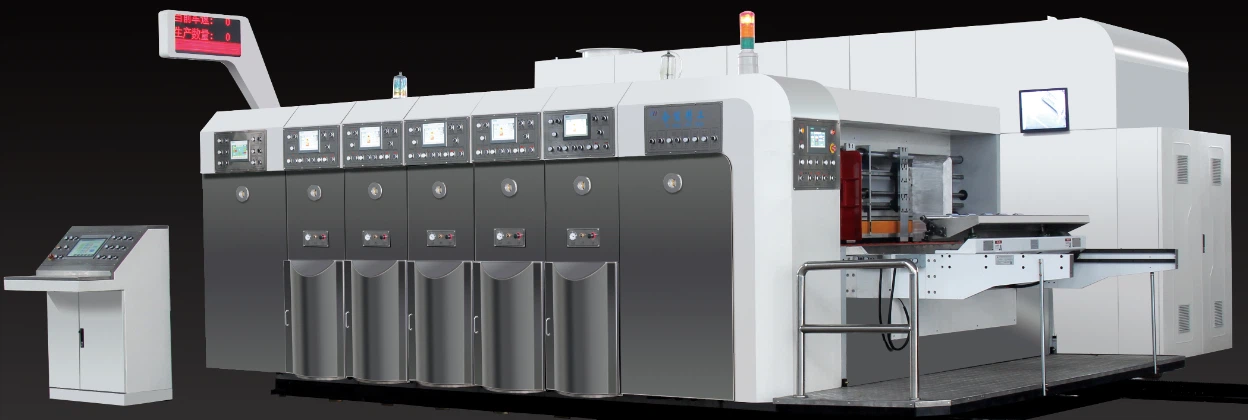
The following crucial steps comprise the continuous and effective automated process of producing corrugated cardboard:
1. Preparing raw materials:
Face paper, also known as inner paper, is a type of paper that is typically smooth and flat.
Corrugated core paper is a type of paper with a somewhat loose texture and flexibility that is used to create a wavy shape in the center.
An eco-friendly glue for adhering different layers of paper is starch adhesive.
2. Preheating:
After being removed from the roll rack, different base papers (face paper, inner paper, and core paper) are run through a sequence of rollers that have been preheated. By adjusting the paper's temperature and moisture content, preheating can increase its flexibility and make subsequent molding and bonding easier.

3. Forming with corrugations:
Two heated corrugated rollers receive the core paper.
The teeth on the surfaces of the top and lower corrugated rollers mesh with one another. This is where the core paper is compressed into a corrugated shape, which is a continuous, regular wave.
After molding, starch glue will be applied right away to the corrugated tip.
4. Composite and Bonding:
The preheated inner paper and surface paper are joined on both sides by the formed and glued corrugated core paper.
A double-sided machine processes the complete composite layer, which consists of inner paper, corrugated core paper, and surface paper. In order to swiftly gelatinize and solidify starch glue and firmly connect each layer, a double-sided machine uses pressure and high-temperature baking in a long heating section.
Multiple corrugated layers, such as double corrugated (two layers of core paper plus three layers of surface paper) or triple corrugated, can be mixed based on the specifications.
5. Shaping and cooling:
The recently manufactured corrugated cardboard is softer and has a higher temperature. The glue is fully cured, the cardboard becomes rigid and formed, and warping is prevented after a series of chilling steps (natural cooling or fan forced cooling).
6. Pressing and Cutting Lines:
To eliminate burrs, the continuous cardboard is sliced longitudinally using a revolving knife in accordance with the order width after cooling.
In order to facilitate easy folding, the pressure roller simultaneously forces both horizontal and vertical creases into the cardboard (used for folding lines when constructing cardboard boxes).
7. Stacking and cross-cutting:
Using a cross-cutting knife, cut each piece of cardboard to the desired length to create corrugated cardboard.
Ultimately, a conveyor belt is used to automatically stack each cardboard piece before sending it out for packaging.

A basic process diagram
Roll of raw paper → Preheating → Corrugated and glued → Composite with inner and surface paper → High temperature bonding → Cooling → Line pressing and cutting → Cross cutting → Stacking → Completed product
Key equipment: A sizable corrugated cardboard production line serves as the center of the entire operation, with double-sided machines and corrugated rollers being the most important parts.